Many of them learn on the job. GST, cash flow, hiring, subsidies and succession all land on one desk. A good course helps an owner decide better across finance, operations, people, compliance and growth, not just absorb theory.
This shortlist covers free classes, government programmes, university-led online courses and a full-year accelerator. Compare them by business stage and learning goal.
Key Takeaways
- Courses range from self-paced introductions to mentored programmes with peer learning.
- Compare syllabus, India-specific content, fees, certification and practical support before enrolling.
- Beginners can start with free or government options; established owners often need specialist advice.
- GAPS is an application-only, full-year accelerator, not an academic certificate course.
Overview of Small Business Management Courses in India
A small business management course is structured learning that helps owners or managers plan, operate, finance, market and grow a small enterprise.
The classification matters when choosing one. Since 1 April 2025, a small enterprise has investment in plant and machinery up to ₹25 crore and turnover up to ₹100 crore. A micro enterprise tops out at ₹2.5 crore and ₹10 crore. A course built for a ₹50 lakh shop will not help a ₹60 crore factory.

Compare options on more than brand name:
- Owner profile and business stage
- Delivery method: self-paced, classroom or cohort
- Level of personal support
- Fees and certification
- Coverage of Indian topics such as GST, subsidies and succession
One caution: GST and succession are not confirmed as standard modules in the government courses below, so check each syllabus before you enrol.
Top Small Business Management Courses for Indian Entrepreneurs
The five options below serve different needs: affordability, government backing, university credibility, specialist guidance and peer networks. Availability changes, so confirm details with each provider. The summaries below reflect listings as of 22 October 2026.
GAPS Growth Accelerator Program for SMEs
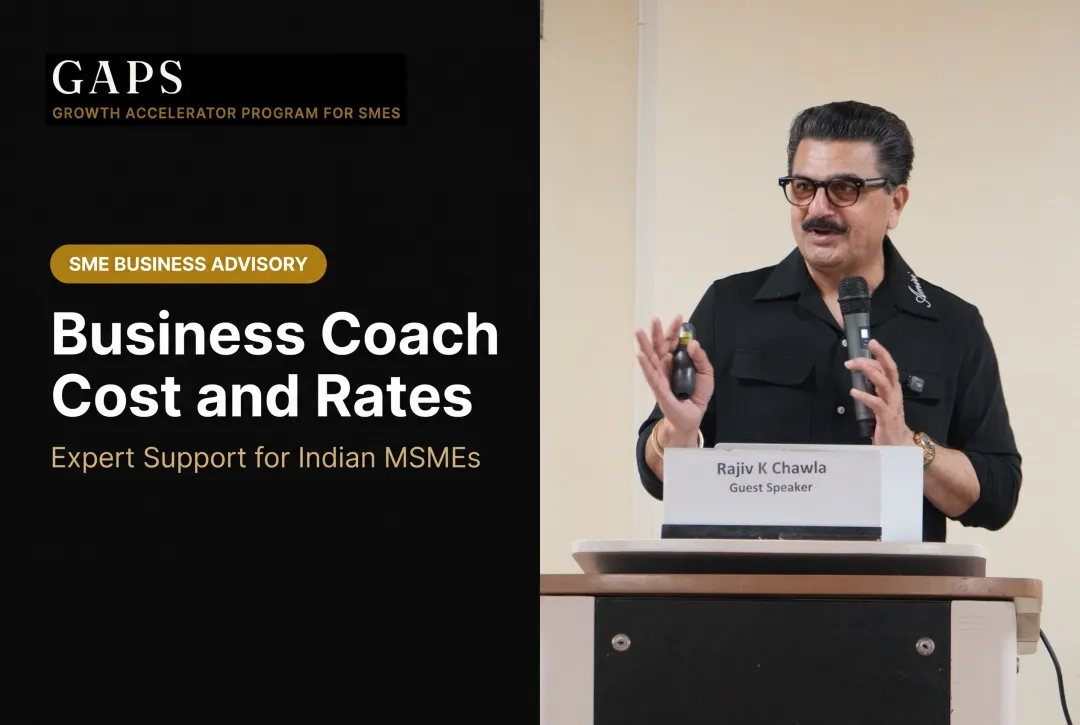
GAPS is a one-year, application-only programme for Indian MSME owners, built and led by Rajiv K Chawla. He is Founder and Chairman of Jairaj Group, a former NSIC board member and a mentor to more than 800 business owners. It suits owners who want structured support beyond a short online course.
What it offers:
- A nine-member expert panel
- 30 annual touchpoints: 24 online sessions and six in-person events
- Peer discussions with businesses of similar scale
- Specialist counsel on governance, tax, GST, legal matters, subsidies, recruitment, digital strategy and growth
The panel includes CS Dr. Ajay Garg (governance, 35+ years), CA Rajesh K Khandelwal (GST faculty for NACIN) and Parminder Singh (30+ years with central and state schemes).
It fits expansion-stage manufacturing SMEs, second-generation family businesses, new manufacturing units and established promoters wanting peer access. It is not an accredited academic qualification, and no certification is offered.
| Aspect | Details |
|---|---|
| Delivery and duration | One year. Apply first, then a 15-minute business call to assess mutual fit. Online and in-person. |
| Curriculum and support | Governance, succession, capital, tax, GST, legal risk, subsidies, recruitment, wealth management, digital adoption, market entry. |
| Cost and fit | ₹6,00,000 plus GST, single tier, no add-ons. Cohorts are limited. Fit is checked on sector, stage and intent; outcomes are never guaranteed. |
NIESBUD Entrepreneurship Programmes
NIESBUD describes itself as an organisation under the Ministry of Skill Development and Entrepreneurship. Its listed Entrepreneurship Orientation Programme (E-Learning) is free, self-directed and available in Hindi and English for individual learners.
Duration, full curriculum, certificate terms and post-course support are not listed publicly. Treat the EOP as an introduction and confirm details with NIESBUD.
NIESBUD also lists an Entrepreneurship Development Programme at Leh (26 October 2026 to 15 January 2027). It is sponsored by the Directorate General Resettlement for retired or retiring Armed Forces personnel, so it is not open to general MSME owners. Its topics include opportunity identification, market surveys, financial literacy, business planning, project reports and digital marketing.
| Aspect | Details |
|---|---|
| Eligibility and access | EOP: individual learners, online. Leh cohort: Armed Forces personnel only. |
| Curriculum and credential | Confirm EOP modules and certificate with NIESBUD. Leh topics as above. |
| Cost and value | EOP is free. Confirm Leh fee, certificate and support with the organiser. |
MSME Ministry Entrepreneurship and Skill Development Programme
The Ministry describes ESDP as a continuing Central Sector scheme. Formats include:
- Entrepreneurship Awareness Programme: 1 day, for potential entrepreneurs
- Entrepreneurship-cum-Skill Development Programme: 6 weeks
- Management Development Programme: about 1 week, for MSME entrepreneurs, managers and supervisory staff
Topics include project selection, marketing, pricing, exports, finance, cash flow, accounting, HR and digital marketing. Handholding covers project reports, finance linkages and awareness of schemes such as MUDRA, PMEGP and Stand-Up India.
These are short training programmes, not comprehensive management qualifications. They won't give an operating business personalised tax or governance advice.
| Aspect | Details |
|---|---|
| Format and availability | Run by MSME-DFOs, Technology Centres and State agencies. Minimum age 18. As of 22 October 2026, the official calendar listed no starts after that date, though the scheme continues. |
| Topics | Project reports, finance, marketing, operations, digital tools, scheme awareness. |
| Fees and support | Organisers set fees. Women, SC/ST, physically handicapped and BPL participants are exempt. A participation certificate needs 80% attendance. |
Wadhwani Liftoff
Wadhwani Foundation's Liftoff is a growth programme for established SMEs, not beginners. The leaflet sets the bar at annual revenue above ₹5 crore, 10 or more payroll employees and at least two years of operation.
- 12 weeks, 1-2 hours per week
- Expert connects, a dedicated growth advisor and a 24x7 AI advisor
- A 90-day growth plan covering market entry, cash flow and funding
- An entrepreneur network
It carries no fee, and the leaflet states it is not a certificate programme. Confirm language options with the provider before you enrol. Wadhwani's site also lists a certification-based programme for SME leadership teams; treat that as a separate offering unless the provider confirms otherwise.
| Aspect | Details |
|---|---|
| Learning model | Cohort-style, light weekly commitment, technology-supported. |
| Tools and support | Advisor, expert and peer connections, growth plan. |
| Cost and fit | Free; no certificate; suits established SMEs meeting the thresholds. |
SWAYAM and NPTEL Entrepreneurship Courses
These are university-led online courses. Two recent examples:
- Understanding Incubation and Entrepreneurship, IIT Bombay (Prof. B.K. Chakravarthy), July-October 2026, 12 weeks
- Entrepreneurship Essentials, IIT Kharagpur (Prof. Manoj Kumar Mondal), January-April 2026, 12 weeks
Both cycles had closed by 22 October 2026, so watch for the next run. NPTEL's general information lists an optional proctored exam at ₹1,000 per course, with certificates issued through the participating institution. The IIT Kharagpur page states a final score of at least 40/100; check each course page for its own pass rules.
They build conceptual knowledge for students, aspiring founders and managers. They offer no personalised help with your own GST, subsidy, governance or succession issues.
| Aspect | Details |
|---|---|
| Structure | 12 weeks, enrolment windows, optional exam. |
| Credibility | IIT faculty; certificate depends on exam and score. |
| Limitations | Theory-heavy; no tailored advice. |

How We Chose the Best Small Business Management Courses
We based the shortlist on verified current offerings, not search visibility. Cheap, popular or familiar-brand courses are not automatically good ones.
Each course had to clear four checks:
- Credibility and transparency: provider reputation, faculty or mentor expertise, certificate status, current syllabus and fee clarity
- Practical relevance: planning, cash flow, accounting, operations, marketing, people, compliance, digital tools and funding, not motivation alone
- Fit: beginner versus established owner, manufacturing versus services, self-paced versus cohort, personal guidance and peer access
- Cost and time: affordability, hours required and post-course support

For named qualifications, the National Qualifications Register shows whether a credential is listed. Listing alone does not prove employer recognition.
Conclusion
The best course depends on your stage, goal, time, budget and need for hands-on implementation help, not the provider's reputation. Beginners can start with NIESBUD's free module or a government ESDP programme. Those wanting academic grounding can try NPTEL.
Before enrolling, verify:
- Syllabus, fee and certification
- Instructors and eligibility
- Format and support
Indian MSME owners who want year-long structured advisory, specialist counsel and peer access can explore GAPS. The first step is a short business-fit conversation.
Frequently Asked Questions
Are there free business management classes?
Yes. NIESBUD's e-learning orientation and the Startup India Learning Program are free, and Wadhwani Liftoff has no fee for eligible SMEs. Certificates and eligibility vary, so check each.
What is the best programme for a small business?
It depends on your stage. Short government or NIESBUD programmes suit beginners, NPTEL suits learners who want theory, and established owners needing specialist guidance may prefer an accelerator such as GAPS.
What does small business management do?
It covers planning, finance, operations, marketing, people, compliance, customer service, risk and growth decisions in a small enterprise.
How do I choose a small business management course in India?
Check syllabus relevance, India-specific topics such as GST and subsidies, provider credibility, format, fees, certification, assignments, mentoring and fit with your business stage.
Are online or in-person courses better for small business owners?
Online courses offer flexibility. In-person programmes add accountability, networking and direct discussion. Choose based on how much interaction and implementation support you need.